
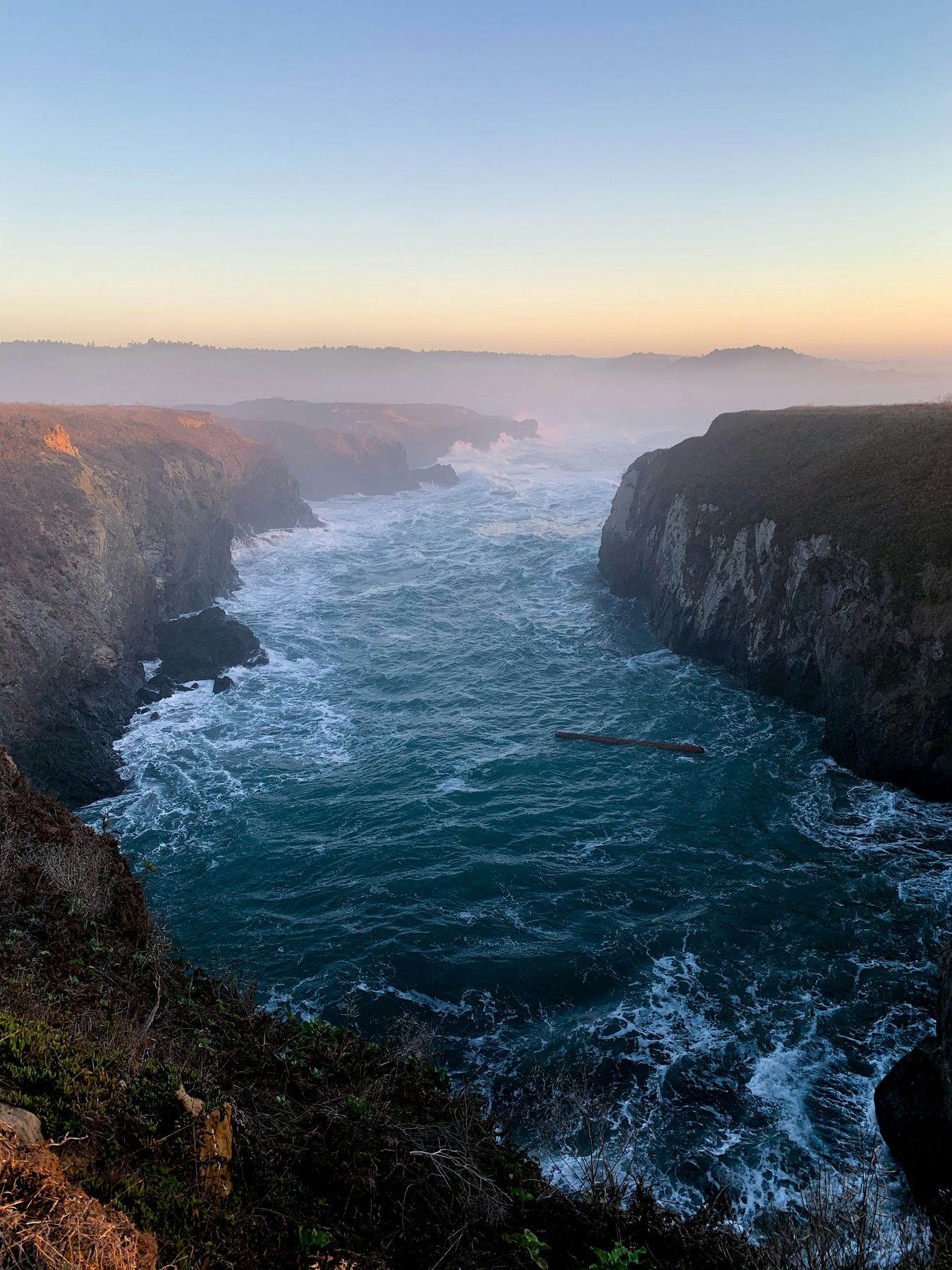
Most of California gets busy in summer and quiet in winter. This coast does the opposite. Our richest season is the wet one, when the rains bring the mushrooms up and the whales move past offshore and most of the visitors have gone home. If you only ever come in August you will have seen the least interesting version of the place.
What follows is the year as we actually experience it, month by month, from twelve acres of coastal forest outside Fort Bragg. It is a guide to when, not a guide to what is safe to eat. Learn identification from someone who knows the ground before you put anything in your mouth, and follow the state fishing and gathering rules, which are real and which change.
Winter
November, the season begins
The first sustained rains wake the forest floor. Within a week or two the candy caps start coming up under the pines, small and burnt orange, smelling of maple syrup once they dry. Golden chanterelles and the first hedgehogs appear alongside them, and porcini may still be flushing from the fall. Gray whales begin moving south. The first negative low tides of the season fall in the afternoon.
December, the heart of it
Candy caps, chanterelles, hedgehogs, black trumpets and yellowfoot can all be up in the same week after a good rain. This is the month the camp is named for. Cold, wet, quiet, and the forest doing its best work. Southbound whales peak around now and can be watched from the headlands without a boat.
January, deep winter
Mushrooms continue for as long as the rain does. The forest turns a green that is difficult to describe to anyone who has not stood in it: moss, fern and lichen on every surface. Storm swells make for dramatic days on the bluffs, and the winter minus tides open the pools again.
Spring
February, the shift
Mushroom season winds down as the botanical year wakes up. Sea vegetables become the story on the big spring low tides, gathered by the rules and at the right hour. The first wildflowers show on the bluffs. Gray whales start heading back north.
March, tide pools and whales
Peak whale watching as the grays move north, some of them with calves. The lowest daytime tides of the year open the pools wide: ochre sea stars, anemones, sea palms, urchins. Sea vegetables are at their best.
April, wildflowers and low water
The bluffs come into bloom and the tide pools stay generous on the spring lows. The light gets long. A good month to learn the pools and the shoreline plants before the summer crowds arrive.
Summer
May, the coast opens up
Long days and the fog settling into its summer rhythm, in by night and out by noon. Tide pools still good on the morning lows. The first hints of the berry season.
June, long light
Full summer. Salmonberries and thimbleberries ripen at the forest edges. Wildflowers hold on the bluffs. Good dry weather for fire building and the rest of the hands-on work.
July, berries and fire
Blackberries start along the sunny edges. Dry enough for real fire craft. Tide pools on the early morning lows. Peak visitor season, and the coast at its most generous.
August, high summer
Blackberries at their peak and huckleberries beginning to ripen in the understory. Warm, dry and long. The last full month before the light starts to change.
Fall
September, the turn
Huckleberries ripe and heavy under the trees, which is the best eating month for them. The light goes softer and lower. If the rains come early, the first thinking about mushrooms starts here.
October, waiting for rain
The whole forest is waiting. When the first real rain arrives, the fall porcini flush and the earliest chanterelles can appear, and matsutake is possible in the right stands. Huckleberries finishing.
November again
The rains return and the cycle starts over, and the coast heads into its richest and quietest season while everywhere else packs up. This is our favorite time to have people out.
How to read this coast, wherever you are
Follow the rain, not the calendar. Mushrooms come a week or two after the first sustained rains, whenever that lands. A dry November pushes the whole season back.
Follow the tide charts. The best tide pooling and sea vegetable days are the negative low tides. In winter they fall in the afternoon, in spring around midday.
Take only what you will use, and learn the rules. Marine Protected Areas, bag limits and seasons are real, and they change. Check before you gather. When in doubt, leave it where it is.
Learn from someone who knows the ground. A few hours with a good instructor is worth a season of guessing, and it keeps you safe.
The point of any of this is not the harvest. It is learning to read the place.
Come and learn it in person
We teach all of this at Camp Candy Cap: mushroom identification in the wet season, tide pools and sea vegetables in spring, fire and coastal skills in summer. Classes are open to the public, kept small on purpose, and members of the Wilderfolk Camping Club choose dates first and pay less.
If you would rather read along from wherever you are, we made a printable month-by-month version of this calendar. You can get it here, and we will send a note when each season turns.